Ashigaru Tanegashima Arquebusier Set – 3D Printable STL Miniatures
$15.00
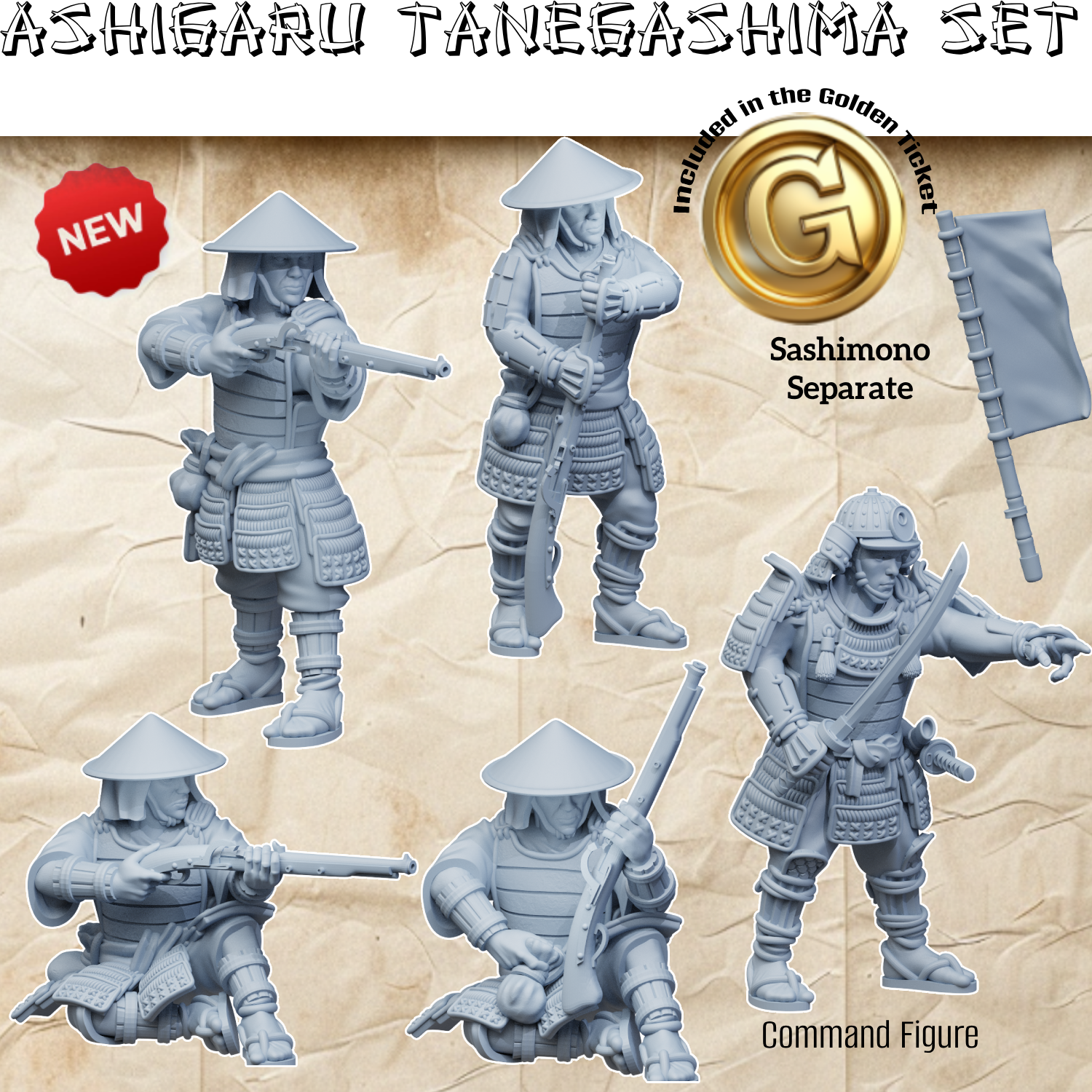
Deploy the might of feudal Japan to your tabletop with our Ashigaru Tanegashima Set. These meticulously sculpted miniatures capture the revolutionary moment when gunpowder changed samurai warfare forever.
Featuring dynamic firing, reloading, and command poses, this set brings unparalleled authenticity and tactical depth to your historical or fantasy wargames. Forge your army with the power that unified a nation and command your victory with these exceptional figures.
This set of high-detail miniatures contains five Ashigaru soldiers and a separate sashimono (back banner), allowing you to assemble a formidable unit of Japanese arquebusiers for your tabletop army. The collection includes a command figure to lead your troops, two soldiers in kneeling positions (firing and reloading), and two soldiers in standing positions (firing and reloading), providing the variety needed to create a dynamic and visually impressive firing line. Each figure is expertly sculpted with crisp textures, capturing the layered lamellar armor (dō), war sandals (waraji), and the iconic jingasa helmet or conical hats. The Tanegashima matchlock rifles are rendered with historical accuracy, from the firing mechanism to the stock.
These STL files are optimized for 3D printing in a 28mm/32mm scale, ideal for resin printers to capture every intricate detail of the armor and weaponry. The set provides essential troop choices for historical wargames set in the Sengoku Jidai (Warring States Period) of Japan, or as unique ranged units in any fantasy setting.
Historical Context: The Ashigaru Tanegashima
The arrival of the Portuguese in Japan in 1543 on the island of Tanegashima marked a pivotal turning point in the nation’s history of warfare. They introduced the matchlock arquebus, a firearm that would be named ‘Tanegashima’ after the island of its arrival. The Japanese, renowned for their metallurgical skill, not only replicated the weapon but improved upon its design with remarkable speed, leading to its mass production and proliferation across the warring clans of the Sengoku period.
The Ashigaru, or ‘light-footed’ soldiers, were the peasant levies who formed the backbone of samurai armies. Initially armed with spears (yari) and bows (yumi), their role was transformed by the Tanegashima. Warlords like Oda Nobunaga recognized the immense potential of these firearms. He famously equipped thousands of his Ashigaru with Tanegashima and employed them in disciplined, rotating volley-fire formations. This tactic was devastatingly effective at the Battle of Nagashino in 1575, where Nobunaga’s 3,000 Ashigaru riflemen annihilated the elite cavalry charge of the Takeda clan, forever changing the face of Japanese battle. The Tanegashima proved that disciplined, well-equipped infantry could overcome the traditional might of the mounted samurai warrior, heralding a new era of military strategy and contributing significantly to the unification of Japan.
Related products